
In our guide, we take at look how they work, why they are worth optimising for and how you can give your content the best chance of being featured. Read on to find out more...
How featured snippets in Google search work
Featured snippets are special search result boxes that appear at the top of Google’s search results page (SERP).
They automatically display a short “snippet” of content from a webpage, together with the page’s title and URL.
The purpose of featured snippets is to provide users with a summary of an answer to their online search query – think “Who, What, When, Where, Why, and How" type-queries.
For example, if you search for “seo agency durham”, featured snippets will display summaries of webpages that answer that query.
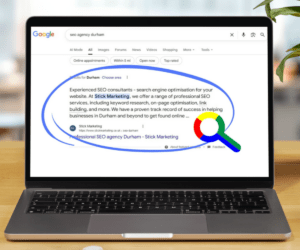
Why we love them
Featured snippets are exciting because they give your content the chance to appear at the top of a SERP in “position #0”.
This is because Google will display snippet answers from any of the pages that rank on the first page of search results. It will prioritise the most relevant snippet of text, rather than just the highest-ranking webpage.
Therefore, even if your content isn’t ranked #1, it can appear above the content that is!
"Position #0" sometimes leads to "zero-click" searches (when user's query is answered on the SERP, so they don't need to click on any website links). However, it will still do wonders for your brand visibility, authority, and click-through rates.
How to get your content chosen as a featured snippet
Like all SEO, there is no way to guarantee that your content will appear as "position #0". However, there are things you can do to increase its chances of being selected by the Google algorithm:
Audit your content
Google picks featured snippets from content that ranks in the top 5 positions on the SERP. Make a list of all your content that has a 1-5 ranking and the keywords/search queries they are targeting.
Do your research
For each of your keywords, look at what content Google currently uses as a featured snippet. You can then use this to guide how you optimise your content to compete for the #0 spot (more on that in a moment).
No featured snippet for a keyword? Google regularly adds new keywords, so keep an eye on it going forward.
Optimise your content
Now that you know what content is snippet-worthy, its time to make sure it has everything the Google algorithm needs to extract content for snippets.
This means focussing on:
- Relevance: ensure your content answers the search query in a simple, concise way. Include clear headings and structure that answer the search query. This not only makes it easier for Google to scan, it also make it easier for your uses to read.
- Format: using your research, tailor your content to how Google prefers it.For example, if the current featured snippet is a paragraph of text, then include a short paragraph answering your target query at the top of your page. Similarly, if current snippets feature lists, tables or videos, then present your content in a similar way.
Monitor your results
Like with all SEO work, you can measure the results by:
- Number of clicks from the SERP
- Change in click-through rate
- Impact on your page’s organic traffic
Going forward, think snippet!
As you write new content, use the tips above to make sure it is giving you the best chance of reaching that #0 spot.
Want to boost your visibility on Google? Contact us today.